
By Fanuel Chinowaita
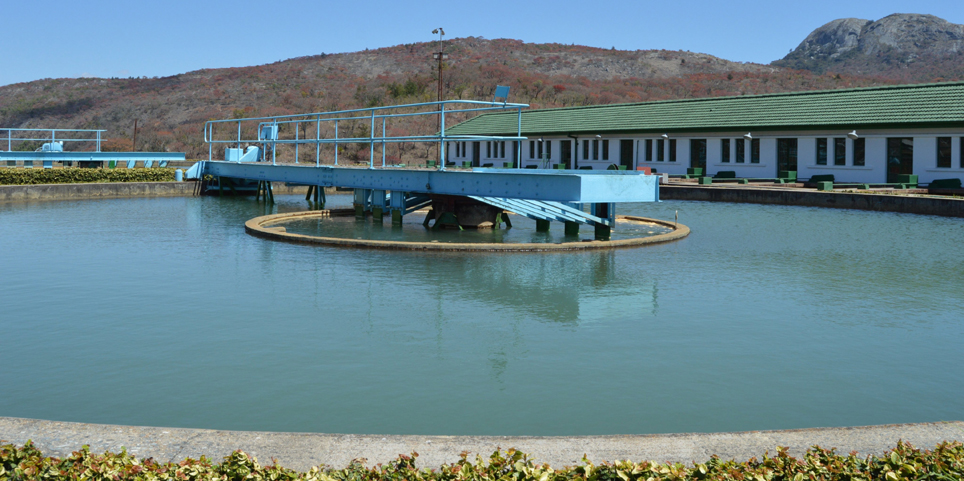
The Wasu Post – Every drop that leaves a tap in Mutare carries a story—one of chemical precision, natural purity, engineering brilliance, and unseen human dedication, a story few ever see, unfolding far from the city’s bustling streets. To reach its source, you must climb the snaking Christmas Pass and descend into Penhalonga, into a landscape marked by human hunger where the earth is ripped open—artisanal pits, mining trenches, vast excavations—all in a feverish scramble for gold, dust and endeavor clinging to the air. Then, a few kilometres further, guarded by silence and strict prohibition, the scenery shifts, the noise of extraction giving way to the hum of preservation at Odzani Water Works, Mutare’s beating heart since 1956, where murky river water is transformed into clear, safe life for thousands of homes.
On a recent visit, a city water engineer and a remarkably eloquent volunteer in an unmarked worksuit revealed the complex alchemy. “Pungwe water is the cleanest,” the Water Superintendent explained. “You could drink it straight from the river,” this pristine stream sourced from eastern mountains flowing so pure it bypasses the main treatment process entirely. The star performer, however, is the Odzani River itself. “Water from Odzani is dirty,” the engineer said plainly. “It needs much treatment,” and what follows is a meticulous ballet of science: aeration, where water takes its first violent breath of oxygen; coagulation, a chemical waltz; flocculation, sedimentation, filtration through sand and gravel, and finally disinfection with chlorine, ensuring nothing harmful survives.
Meanwhile, Pungwe’s flow dances around this rigorous cleansing until the waters must reunite, Pungwe’s mighty force split at a break pressure tank then blended with the now-clean Odzani water, together journeying toward Christmas Pass tanks as a blended lifeline for the city. Amid the engineering marvel, it was the unnamed volunteer who added a profound human layer, her knowledge deep and her explanations precise, moving with the quiet ownership of someone guarding something sacred—a community champion, a retired expert, her suit bearing no badge, only the unspoken commitment of those who defend public resources without recognition.
Here, in this guarded space between the mining scars and the thirsty city, the contrasts are stark: one landscape digs for riches, the other safeguards life; one scars the earth, the other protects its veins. Residents may worry over cuts, shortages, and tariffs, but behind those concerns flows a testament of foresight, of care, of a hidden lifeline sustained by both nature and countless quiet custodians—Mutare’s most essential story, flowing clear and steady, a drop of engineering, a torrent of care, returning home.