By Fanuel Chinowaita
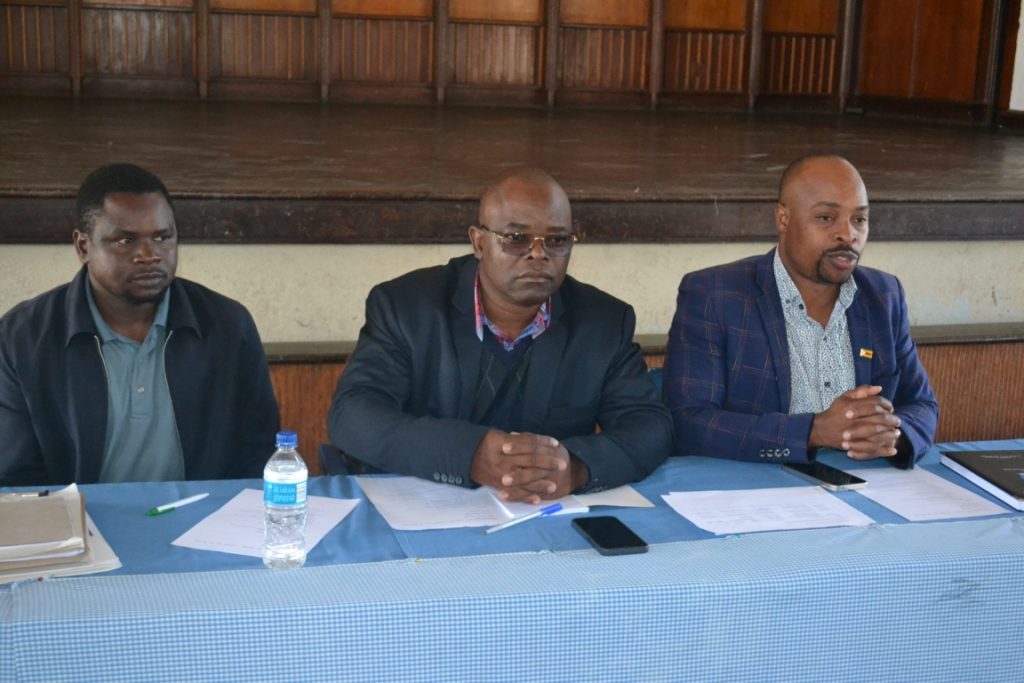
Mr Zimunya (centre), Engineer Sango (right)
Mutare –18 July 2025 – The City of Mutare has embarked on a bold and long-overdue initiative to expand and redesign its Central Business District (CBD), replacing the restrictive 1974 town plan that has long limited the city’s growth.
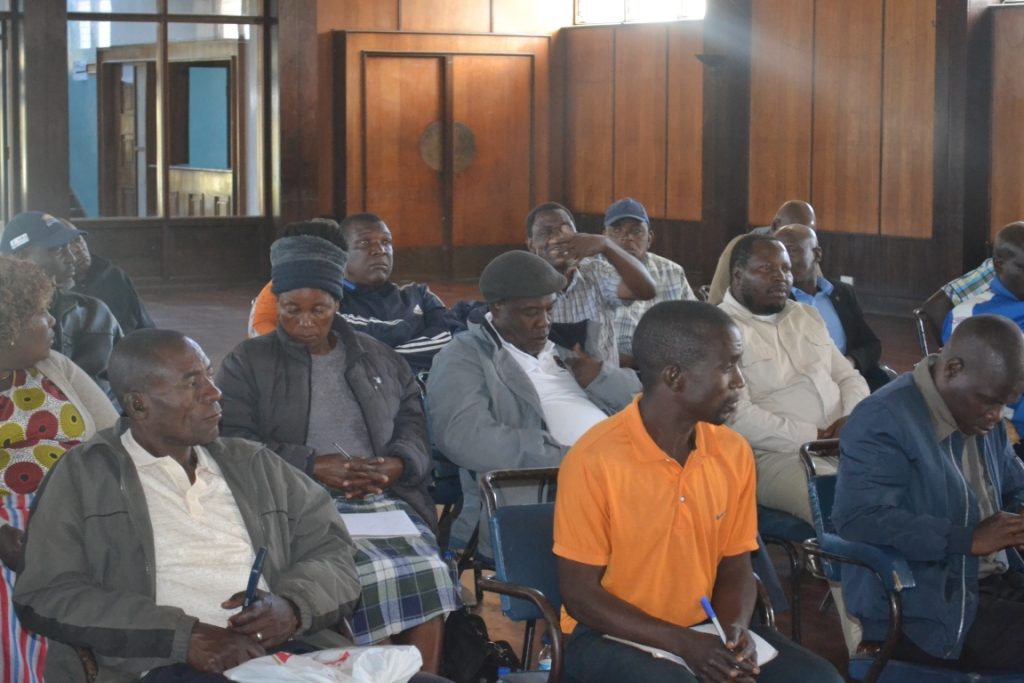
The proposed expansion, unveiled during a public consultation meeting held at Mutare Hall, signals a fresh direction in urban planning aimed at modernizing infrastructure and aligning with contemporary development standards.
Acting Director of Spatial Planning, Brian Sango, announced that the local authority had engaged Kums Planning Consultancy (KUMZ) to craft the new Mutare Central Business District Local Plan. Willougby Zimunya, a lead consultant with KUMZ, emphasized the urgency of the project, stating, “The 1974 plan confined the CBD to areas between End Avenue and 7th Avenue, with Sakubva River as the boundary. But Mutare has outgrown that framework. The 2021 masterplan already incorporates NRZ land, Darlington, Palmerston West, Girls High, Mutare Hillside, and stretches up to Victoria Chitepo Provincial Hospital—clearly, we need a fresh blueprint.”
The new proposal will see the CBD extended in a broad arc, beginning from Sakubva River and running along Glasgow Road, Industrial Road, Carrington Road, and Palmerston West via Plantation Road, before curving through Rekayi Tangwena Drive, Herbert Chitepo Avenue, Jason Moyo Avenue, and Leopold Takawira Street in Murambi.
The route will continue up Robert Mugabe Road to the Victoria Chitepo Provincial Hospital and NatPharm warehouse, then loop back through Dawson Street in Yeovil, Dobson, ZRP Main Camp, and Riverside, eventually reconnecting with Sakubva River.
This expanded zone will incorporate key areas previously left outside the CBD, such as the Railway Station precinct, parts of Darlington including Carrington Street and Palmerston East, and sections of Murambi and Yeovil. The aim is to integrate high-traffic and economically significant zones into a single, well-structured urban framework.
One of the most transformative aspects of the plan is the promotion of vertical and mixed-use development. Zimunya explained that zones like the stretch from Duly’s Motors to 11th Avenue, previously reserved for residential flats, will now allow for multi-storey buildings with retail or office spaces on the ground floor and residential units above.
“This approach maximizes land use while reducing urban sprawl,” he said. Similarly, cluster housing will be permitted in suburbs like Murambi and Palmerston East, enabling property owners to develop multiple units on a single stand under the revised zoning scheme.
Despite the ambitious scope, the proposal has sparked calls for real, visible changes on the ground. Residents, informal traders, and civil society groups—among them the Mutare Informal Traders Association (MITA), United Mutare Residents Association Trust (UMRAT), Commuter Omnibus Associations, and individual residents—welcomed the plan but were united in demanding accompanying infrastructure improvements.
“A bigger CBD means nothing if our roads remain congested, our markets dilapidated, and our transport ranks chaotic,” remarked one resident during the consultation. “In South Africa, even small towns have smooth roads, clean markets, and properly managed taxi ranks. Why can’t we have the same?”
Stakeholders outlined clear priorities for the city council:
Upgrading road infrastructure to ease traffic flow within and around the expanded CBD.
Establishing modern, dura-walled markets with sanitation facilities and effective council oversight.
Creating council-regulated transport ranks to eliminate disorder and improve commuter safety.
In response, Zimunya assured attendees that the planning process would be inclusive, transparent, and participatory, with digital engagement platforms to accommodate more public voices. “We are committed to a plan that reflects the needs of Mutare’s residents and businesses—one that positions the city for sustainable growth,” he added.
The blueprint is being aligned with the goals of National Development Strategy 1 (NDS1), which prioritizes infrastructure development and spatial transformation as key pillars of national progress. However, residents remain cautiously optimistic, noting that such plans often falter without timely implementation and consistent follow-through.
As Mutare stands on the brink of potentially reshaping its urban identity, the success of this initiative will hinge not only on vision but on delivery. Without swift action to upgrade roads, reorganize markets, and streamline transport, this plan risks joining a long list of shelved proposals.
The CBD expansion offers a historic chance for Mutare to modernize and meet the aspirations of its growing population. Now, all eyes are on the council to turn this ambitious plan into everyday reality—for traders, commuters, and future generations.