
By Fanuel Chinowaita
MAONDE, Sakubva, 4 April 2026— In the dense, winding lanes of Maonde, where the red dust settles on everything it touches, there is a workshop without walls. There is no electricity meter ticking over, no signboard hanging from a gate. But if you stop and listen past the barking dogs and the chatter of vendors, you will hear the rhythmic scrape of a reed knife against palm fronds.
That sound is Johannes Lovemore Landinyu, telling the world that blindness is not the end of ambition.
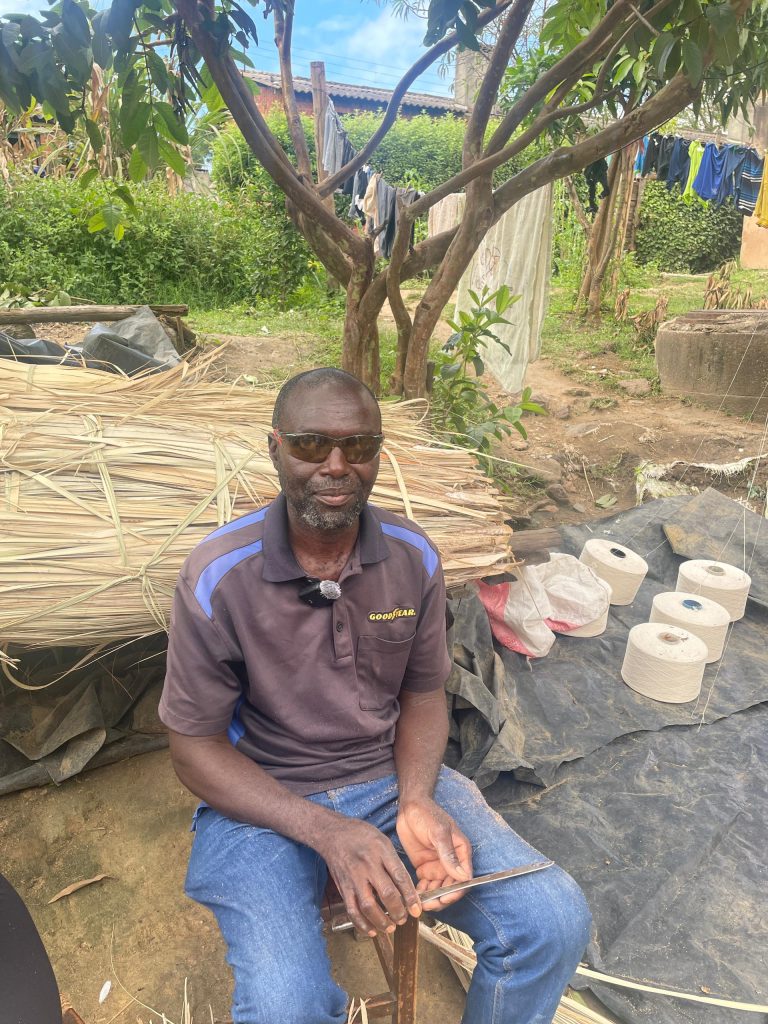
Johannes Lovemore Landinyu
Born in Sakubva in 1975, Johannes is a son of this soil. But his life took a sharp, dark turn in 1996. He was a young man then, full of the fire of the early twenties, when the headaches started.
“I started having serious headaches which were affecting my eyes,” Johannes recalled, sitting in the small patch of shade outside his home. He spoke calmly to The Wasu Post, his hands never stopping their work on a half-finished mop.
He went to the eye unit, hoping for a simple prescription. Instead, he received a verdict that would freeze any family’s blood. The condition was severe. The doctors told him the only hope lay in surgery, but not in Mutare. Not even in Harare. He had to go to South Africa.
“There were three options,” Johannes said, his voice steady. “They said, ‘Either he will be fine, he may go mad, or he will die.’ So, my parents decided not to go to South Africa for the surgery.”
It was the most painful kind of love. Faced with the terrifying roulette of permanent madness or death, his parents chose to bring him home. He now lives without sight. The lights went out on his vision, but not on his will.
Unable to see the sun rise over Sakubva, Johannes decided to build a different kind of future. He made the long journey to Bulawayo, to the famous Jairos Jiri Centre, where the blind and the disabled are taught that their hands still have power.
“I went to Jairos Jiri in Bulawayo where I learnt crafts,” he said.
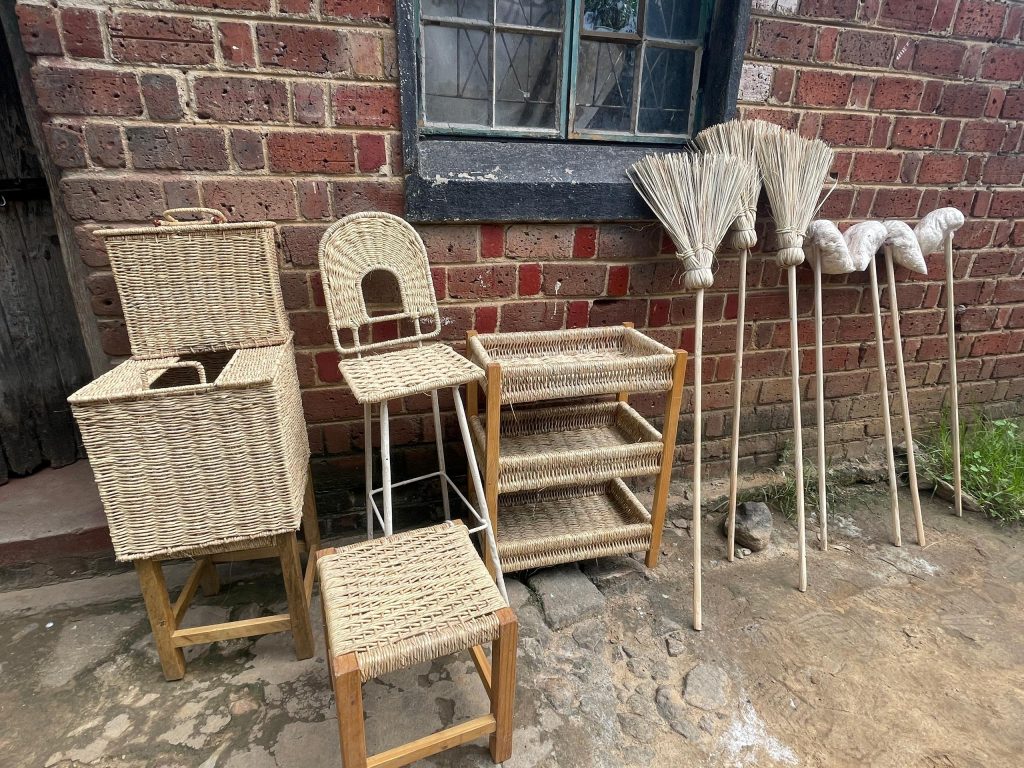
Today, that education is the only lifeline for his household. His fingers are his eyes. With practiced precision, he weaves plastic strips and reeds into objects of utility and beauty. The ground around his chair is a catalog of his labor: sturdy mops, intricately woven chairs, durable baskets and TV stands.
But a storm is coming. Not the political kind, but the literal one. As he spoke, Johannes glanced upward—a reflexive habit, even though he cannot see the clouds gathering over Maonde. He has an urgent appeal.
“I am appealing for a shade,” he said, the words heavy with need. “Especially during the raining seasons. A place which is comfortable. A place I can work during the day and night.”
Right now, his factory is at the mercy of the weather. When the rains come, the reeds get wet, the work stops, and the money dries up. He doesn’t need a mansion. He needs four walls and a roof to protect his independence.
Before the world shut down in 2020, Johannes was flying high. His reputation had crossed the border.
“My business was very high before Covid,” he explained. “People were buying my products to take to South Africa.”
But the pandemic destroyed those supply lines. The South African market vanished. Now, the man who once exported his craft is forced to do something much harder: navigate the streets of Mutare without sight to find new customers.
“After Covid, business is down,” he lamented. “I have to go to town to look for the market.”
Despite the struggle, Johannes refuses to become a beggar. He is a craftsman. And he has a message for the able-bodied youths of Sakubva who sit on street corners waiting for handouts.
“I urge youths to work and not wait for spoon feeding,” he said firmly. “There are a lot of things to do that give money.”
He is proof. A blind man, weaving a living from thin air, asking only for a place to work and a buyer for his goods.
If you are a member of the corporate social responsibility team looking for a worthy project, or a resident who needs durable crafts, Johannes Landinyu is ready.
To buy his mops, chairs, or TV stands, or to help him build that shade, call him directly on 0775201502.
Because in Maonde, Sakubva, one man is proving that even in the dark, the human spirit still knows how to weave a future.