
By Fanuel Chinowaita
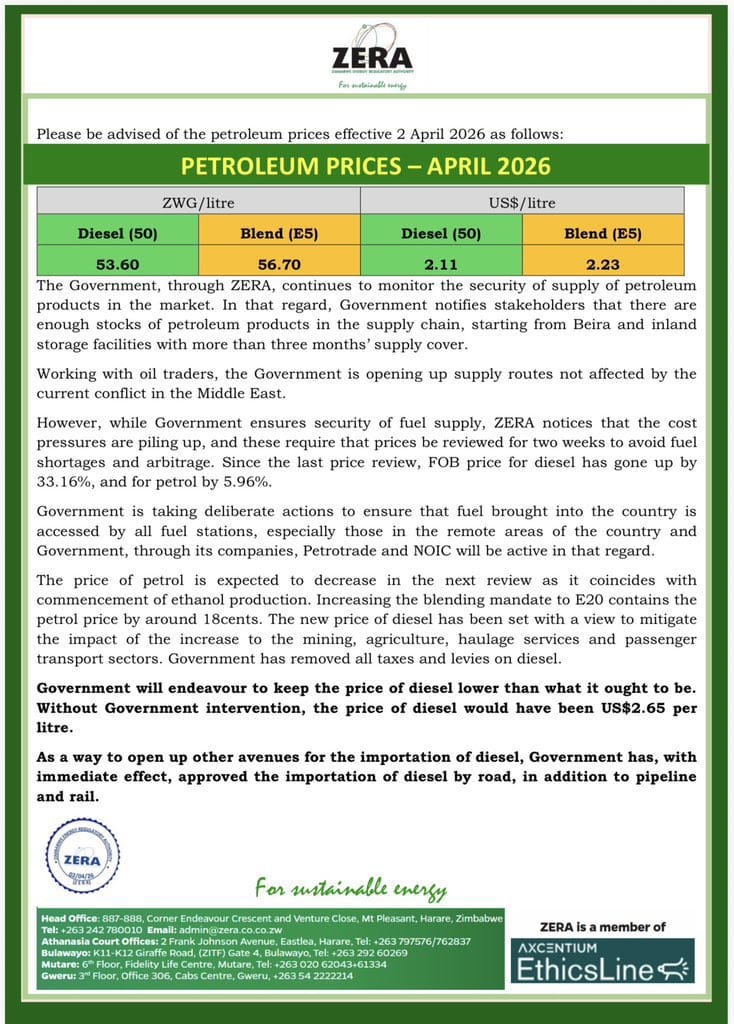
Mutare, Zimbabwe, 2 April 2026 — Zimbabweans will pay significantly more for diesel and petrol effective today after the Zimbabwe Energy Regulatory Authority (ZERA) hiked fuel prices, citing soaring global oil costs driven by the ongoing war between the United States and Iran.
Diesel (50) now costs 53.60 Zimbabwe Gold (ZWG) per litre, up from previous levels, while the Blend (E5) petrol rose to 56.70 ZWG per litre. In US dollar terms, diesel is now pegged at US$2.11 per litre and Blend at US$2.23.
The price adjustment comes just days after US President Donald Trump announced that American forces would withdraw from Iran within two to three weeks, declaring a peace deal with Tehran “irrelevant” and telling allied nations to “go get your own oil” from the strategic Strait of Hormuz. The conflict has effectively choked the world’s most critical shipping lane for energy supplies, sending global crude prices to near US$120 per barrel — the largest one-month surge on record.
ZERA confirmed that the Free on Board (FOB) price for diesel has skyrocketed by 33.16% since the last review, while petrol increased by 5.96%.
“Cost pressures are piling up, and these require that prices be reviewed for two weeks to avoid fuel shortages and arbitrage,” ZERA said in a statement.
In an effort to blunt the impact on key economic sectors, the government announced it has removed all taxes and levies on diesel. Without this intervention, ZERA stated, the price of diesel would have reached US$2.65 per litre — a full 54 cents higher than the current US$2.11.
“The new price of diesel has been set with a view to mitigate the impact of the increase to the mining, agriculture, haulage services and passenger transport sectors,” the authority said.
Despite the price shock, ZERA moved to reassure the public that Zimbabwe has sufficient fuel stocks. The regulator stated that there are more than three months’ supply cover available, starting from the Beira corridor and extending to inland storage facilities.
Working with oil traders, the government is also opening up alternative supply routes not affected by the Middle East conflict. In a significant policy shift, ZERA announced the immediate approval of diesel importation by road, in addition to the existing pipeline and rail options.
Government-owned fuel companies, Petrotrade and NOIC, will also be active in ensuring that fuel reaches remote areas of the country.
ZERA projected that the price of petrol is expected to decrease in the next review cycle, coinciding with the commencement of ethanol production. The authority noted that increasing the ethanol blending mandate to E20 would contain the petrol price by approximately 18 cents per litre.
The war, now in its fifth week, has seen thousands killed across Iran and Lebanon. Trump claimed on Tuesday that the US campaign against Iran is “finishing the job” and that American forces could exit the conflict within two weeks. However, the disruption to the Strait of Hormuz — through which a fifth of global oil passes — has already left fuel-importing nations like Zimbabwe scrambling to manage the fallout.
For ordinary Zimbabweans, the immediate effect will be higher transport fares and increased costs for basic goods, adding to existing inflationary pressures in the economy.