
By Fortunate Black
*MUTARE*— Youth groups in Manicaland are calling for transparency and equitable benefits from Zimbabwe’s extractive sector, arguing that resource-rich communities remain mired in poverty and environmental degradation despite decades of mining activity.
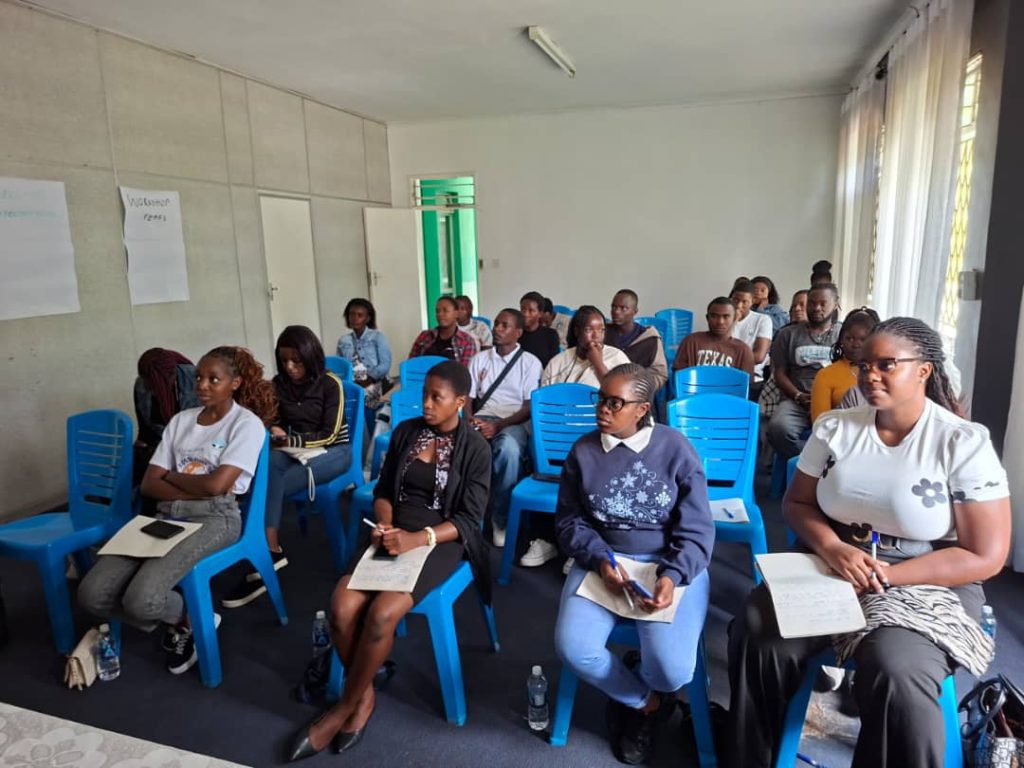
At a meeting convened Yesterday by the Manica Youth Assembly at the Anglican Church Hall in Mutare, young people launched the “Just and Fair Share Campaign,” an initiative aimed at equipping communities with negotiation skills and pushing for greater accountability in mineral governance.
The campaign, spearheaded by the Centre for Natural Resource Governance (CNRG) with support from the Open Society Foundations, seeks to move communities from awareness to active participation in negotiations with mining companies and government regulators.
“I have learned that as young people, we actually have a role to play in how our minerals are managed,” said one participant. “Before this, I didn’t understand how mining contracts are made or why communities are often left out.”
Lewis Marowa, a facilitator from Green Governance, highlighted the paradox facing regions such as Manicaland and Matabeleland North, which remain impoverished despite significant mineral wealth. Discussions at the meeting identified land degradation, water pollution, community displacement, gender-based violence, and school dropouts as key challenges linked to mining operations.
Participants cited the Marange diamond fields as a cautionary tale, noting that billions of dollars in revenue were reportedly generated while local communities saw little benefit. Reports of displacement and alleged revenue losses from the area reinforced calls for stronger governance mechanisms.
Concerns were also raised over opaque contracts between mining companies and the government, with communities often excluded from negotiations and unaware of revenue flows. Youths noted that weak benefit-sharing mechanisms and a lack of knowledge about their rights further marginalize local populations.
The meeting comes as global demand surges for critical minerals such as lithium, copper, and nickel, driven by the transition to clean energy. Zimbabwe is positioned as a key player in the sector, with demand for such minerals expected to rise significantly by 2040.
Participants also voiced frustration over delays in the Mines and Minerals Bill, which they said has stalled despite reaching advanced legislative stages. Calls were made for a functional legal framework to improve transparency, accountability, and environmental protection.
“What stood out for me is that this campaign is not just about awareness, but about action,” said another attendee. “We are being equipped with negotiation skills so that we can engage with mining companies and government authorities. It gave me confidence that change is possible if we organise ourselves.”
The initiative aims to establish youth-led advocacy networks at the ward level, create platforms for real engagement in negotiations, and build a national campaign network linked to peers in other mining regions such as Hwange.
CNRG representatives referenced past advocacy efforts, including successful resistance to proposed mining activities in Hwange National Park in 2020, which was preserved following civil society intervention.
Organizers stressed that “the law is not for lawyers alone,” emphasizing the need for ordinary citizens, particularly young people, to understand and engage with policies governing natural resources.