
By Fanuel Chinowaita
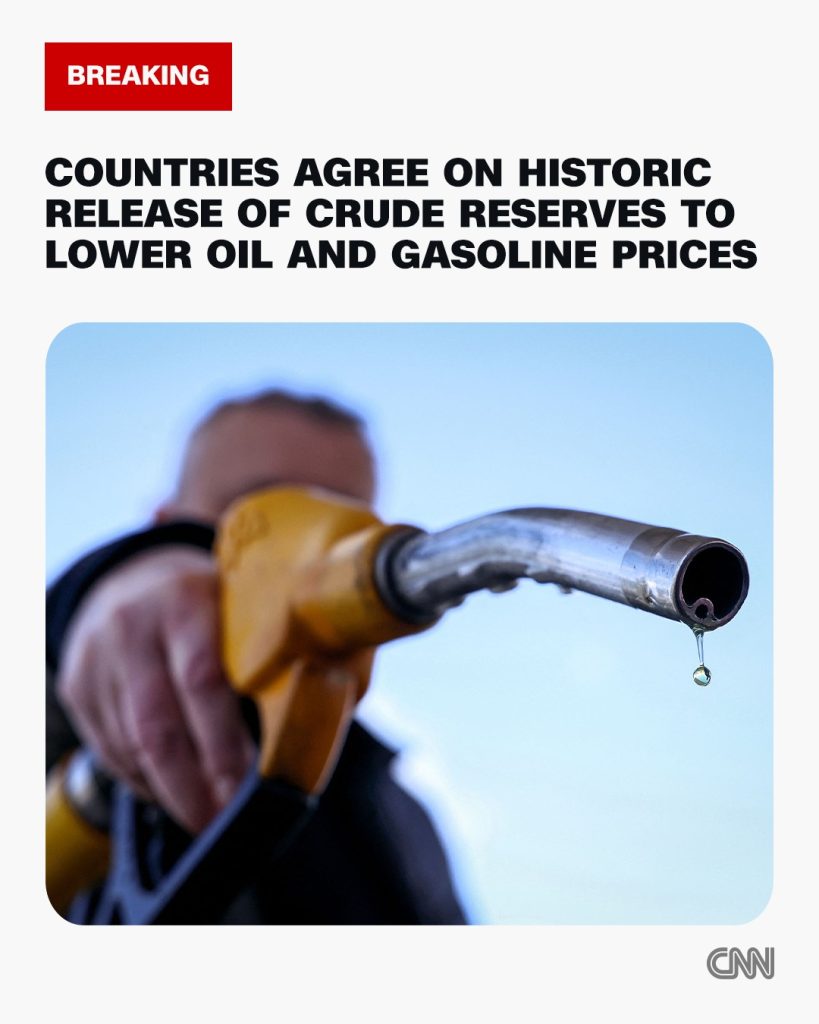
LONDON — Member states of the International Energy Agency (IEA) have unanimously agreed to release 400 million barrels of crude oil into the global market in what officials describe as the largest emergency release of oil reserves in history, aimed at easing soaring fuel prices triggered by escalating tensions in the Middle East.
IEA Executive Director Fatih Birol said the emergency move is intended to stabilize global supply after the effective closure of the strategic Strait of Hormuz, a critical maritime corridor through which roughly one-fifth of the world’s daily oil production normally passes.
“IEA countries will be making 400 million barrels of oil available to the market to offset the supply lost through the effective closure of the Strait,” Birol said during a live broadcast on Wednesday.
He added that the action is meant to soften the immediate shock to global energy markets, although the long-term solution depends on restoring safe transit through the Strait.
The near-blockade of the Strait of Hormuz has disrupted global supply chains, with an estimated 15 million barrels of crude oil and 5 million barrels of refined oil products prevented from reaching international markets daily.
Energy analysts warn that even the record release may offer only temporary relief, as the 400 million barrels could effectively cover just 26 days of lost supply if the disruption persists.
Amrita Sen, founder of the market intelligence firm Energy Aspects, said the move may fall short of stabilizing prices if the crisis continues.
Global oil prices remained elevated despite the announcement.
Brent crude, the international benchmark, rose about 4 percent to around US$91 per barrel, while West Texas Intermediate (WTI) climbed to roughly US$87 per barrel.
Earlier this week, both benchmarks briefly surged above US$100 per barrel, the highest level in nearly four years, amid intensifying hostilities between Israel and Iran.
Iran reportedly launched what state media described as its “most intense operation” since the start of the conflict, while Israel carried out additional strikes targeting locations in Tehran.
Maritime authorities also reported that three vessels were struck by unidentified projectiles near the Strait, raising further concerns about shipping safety in the region.
Military tensions threaten supply route
Intelligence reports suggest that Iran has begun laying naval mines in the waterway, potentially escalating the crisis further.
According to US congressional assessments, Iran possesses around 6,000 naval mines capable of disrupting maritime traffic.
Analysts say this development has introduced a new dimension to the crisis, making it harder for energy markets to stabilize.
Experts also caution that releasing strategic reserves does not necessarily translate into immediate relief for consumers.
During the 2022 global energy crisis following the Russian invasion of Ukraine, a similar release of international reserves reduced gasoline prices in the United States by only 17 to 42 cents per gallon, according to the US Treasury.
Zimbabwe monitors fuel situation
The developments are being closely watched in Zimbabwe, where authorities recently moved to reassure the public about supply levels.
On 5 March 2026, Information, Publicity and Broadcasting Services Minister Zhemu Soda said the country has between two and three months of fuel reserves, amid fears of shortages linked to the Middle East crisis.
The Zimbabwe Energy Regulatory Authority (ZERA) recently raised maximum fuel prices, pushing petrol to US$1.71 per litre and diesel to US$1.77 per litre, citing instability in global oil markets.
Energy analysts warn that if tensions around the Strait of Hormuz persist, fuel prices worldwide—including in Zimbabwe—could remain under pressure in the coming weeks.