
By Fanuel Chinowaita
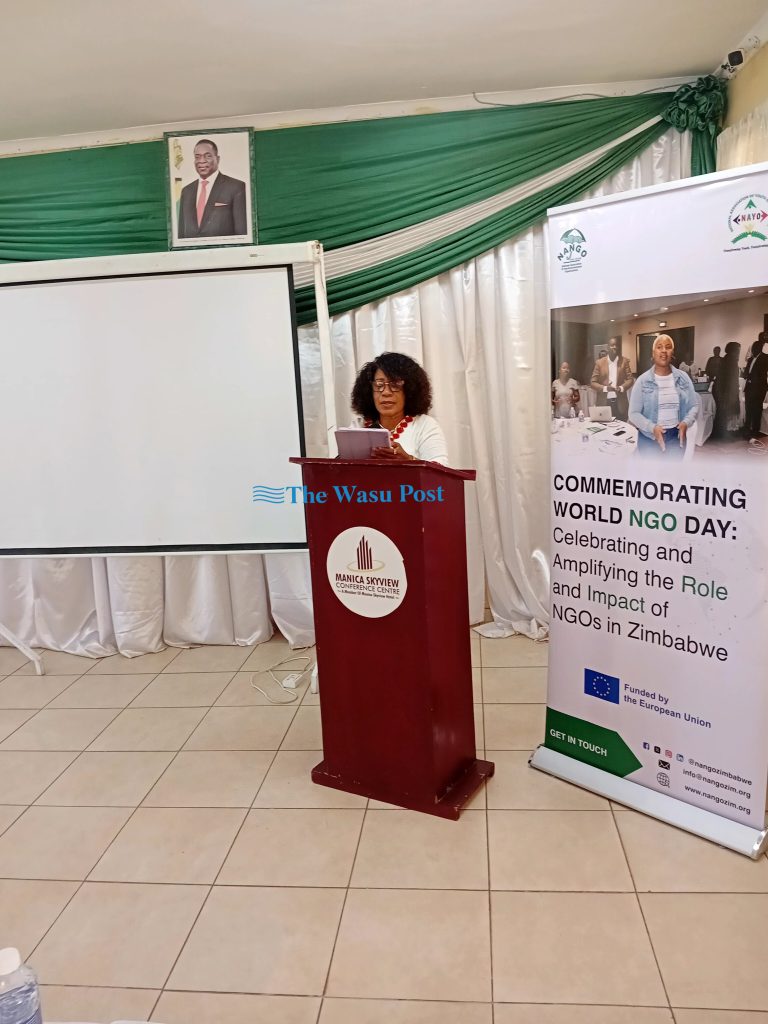
Mutare — On 27 February 2026, civil society organisations (CSOs) from across Manicaland converged in Mutare to comemorate World NGO Day—an occasion meant for celebration, but one that unfolded amid hard conversations about survival, sustainability and shrinking donor support.
The gathering marked the third edition of the CSO Symposium organised by the National Association of Non-Governmental Organisations (NANGO) Eastern Region. While the event celebrated civic contribution, it also laid bare the sector’s growing vulnerabilities, particularly following the stoppage and scaling down of USAID funding, which many organisations acknowledged had badly disrupted their operations.
Opening the symposium, NANGO Eastern Region Chairperson Getrude Chimange described the moment as defining for civil society.
“We are operating in a time of conflict, economic fragility, climate shocks, humanitarian pressures and shrinking civic space,” she said. “Yet we continue to gather because civil society has not retreated. Communities are still organising, even under immense pressure.”
The symposium brought together government departments, constitutional commissions, labour unions, youth-led organisations, human rights groups and the media.
Speaking on the sidelines, NANGO Eastern Region Coordinator Franklin Mukwaira confirmed that about 43 organisations attended the event.
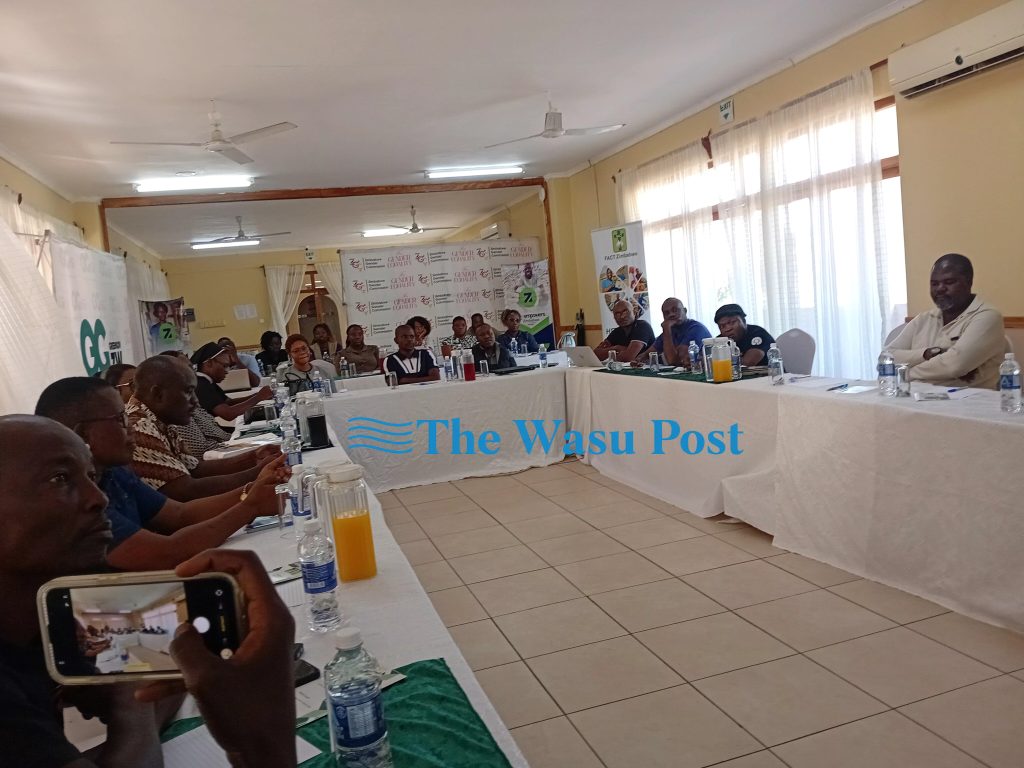
“The numbers alone tell a story,” Mukwaira said. “Despite funding challenges, CSOs are still committed to engagement, learning and collaboration. That resilience is encouraging.”
Youth participation was also evident, with Manica Youth Assembly among the organisations present, reflecting the growing role of young people in civic leadership and community mobilisation.
A dominant theme throughout the symposium was the impact of the USAID funding stoppage. Several organisations openly admitted that the withdrawal had severely affected programmes, forcing some to suspend projects, reduce staff or scale back services that communities had come to rely on.
For years, USAID funding had supported interventions in health, livelihoods, governance, humanitarian relief and youth empowerment. Its abrupt halt exposed how dependent many initiatives had become on external financing.
“Some organisations are barely surviving,” one CSO leader said quietly. “In some communities, services simply stopped.”
Yet, rather than surrendering to despair, the conversations shifted towards adaptation, localisation and innovation.
This year’s theme — Celebrating People-Driven Transformation: Adapt, Innovate, and Empower for Resilience and Sustainable Impact — framed the discussions, with speakers emphasising that sustainable development must be anchored in active citizen participation rather than donor dependency.
The symposium also provided space for candid engagement between civil society and the state. Delivering key remarks, Mrs Mugwagwa from the Department of Social Development urged NGOs to tighten internal governance as a critical survival mechanism.
“Every organisation must have a constitution and a valid registration certificate,” she said. “You must clearly define your board and ensure you have a functional governing body.”
She stressed that compliance and transparency were non-negotiable.
“Organisations are required to keep accurate records and minutes of all meetings,” Mrs Mugwagwa said. “Financial reports must be prepared and audited annually by a certified accountant. Good governance protects both the organisation and the communities you serve.”
Her remarks came at a time when CSOs are navigating the implementation of the Private Voluntary Organisations (PVO) Amendment Act, which participants said must be applied with clarity to avoid disrupting critical humanitarian and development work.
Beyond policy and funding debates, the symposium also highlighted tangible community impact. Representatives from the Zimbabwe Republic Police acknowledged the role of civic organisations in addressing social challenges, particularly among young people.
“We have seen a reduction in cases of drug abuse among youths in some areas,” a police officer told the gathering. “This improvement is largely due to sustained awareness campaigns and empowerment activities being carried out by civic organisations.”
The acknowledgement served as a reminder that, despite financial strain, CSOs continue to make measurable differences at grassroots level.
The diversity of institutions in attendance reflected the breadth of civic engagement in Manicaland. These included Zimbabwe Anti-Corruption Commission, Zimbabwe Gender Commission, Zimbabwe Human Rights Commission, Zimbabwe Diamond and Allied Workers Union, Zimbabwe Human Rights Lawyers, ZIMRIGHTS and community-based organisations such as Hope for Kids.
As the symposium concluded, one message resonated strongly: while the withdrawal of major donors like USAID has left some CSOs severely weakened, it has also forced a sector-wide reckoning.
Organisations are being pushed to strengthen governance, diversify funding, deepen community ownership and build resilience beyond donor cycles.
In a time of shrinking resources and rising needs, the gathering reaffirmed a simple but powerful truth — when aid stops flowing, the work does not stop. Communities adapt, civil society recalibrates and resilience becomes not just a theme, but a lived necessity.