
By Fanuel Chinowaita
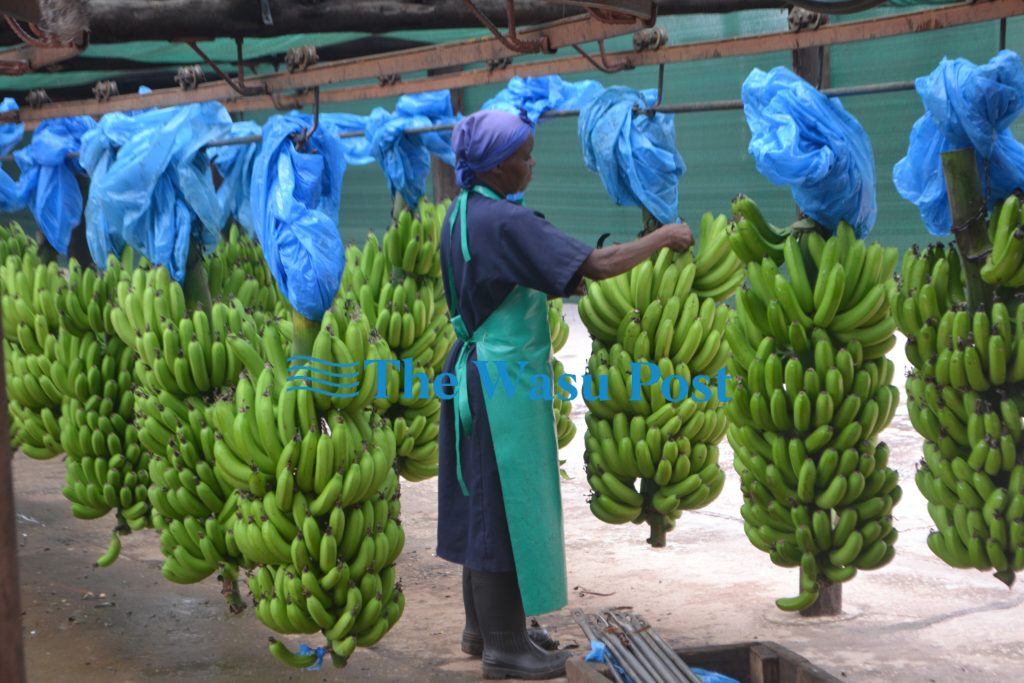
Burma Valley, 17 January 2026– Zimbabwe’s leading banana producer, Matanuska, is earning more than US$4 million after every harvest, underscoring the growing economic value of the banana value chain in Manicaland and its contribution to the national horticulture recovery drive.
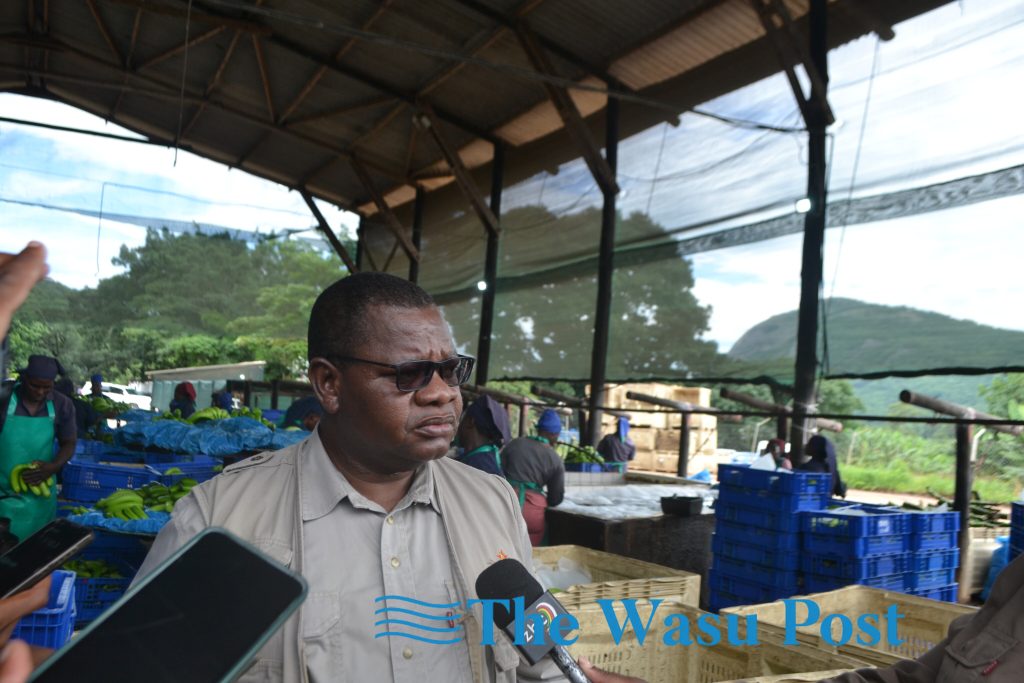
The figures were revealed during an Irrigation Scheme Monitoring visit to Matanuska in Burma Valley yesterday by Permanent Secretary in the Ministry of Lands, Agriculture, Fisheries, Water and Rural Development Professor Obert Jiri, who toured the estate to assess production, processing and market opportunities within the banana sector.
General Manager Crispen Manyuchi said Matanuska currently has 321 hectares under bananas, with 265 hectares already mature and in production, while the remainder is still immature. From the mature plantations, the company is averaging 50 tonnes per hectare.
“At the moment, from that spec we are targeting 50 tonnes per hectare, which is the average that we are getting,” said Manyuchi. “If you calculate that with an average back-on-farm price of 25 US cents per kilogram, that is the money that we are expecting to reward from those volumes.”
Based on the current production levels and pricing, Matanuska earns approximately US$4 012 500 per harvest, highlighting the profitability of large-scale banana farming under irrigation.
Matanuska employs about 450 workers and operates largely on its own land, with nearly 200 hectares under joint venture (JV) partnerships, a model Manyuchi described as key to unlocking value for both the company and outgrowers in the Bema Valley green belt.
“This JV partnership is a major mantra for us to fulfil our green belt here in Bema Valley, paying particular attention to specialisation in banana production,” he said. “This is the main portion of Matanuska in fulfilling the horticulture recovery, which is a national policy we are focusing on.”
Professor Jiri said the visit was aimed at appreciating the scale of production and identifying opportunities and challenges in the banana value chain, which government sees as strategic to growing agriculture into a US$2 billion industry.
“We are specifically now at the banana value chain where we are seeing production and processing of table bananas,” said Jiri. “Our climate is so good that we really produce the best taste, the best size and of course the best quality in terms of what the market needs.”
He added that Zimbabwean bananas, particularly from Manicaland, are highly competitive on regional markets.
“I must say that Zimbabwe produces the best quality of banana. These bananas from Manicaland really are the best across the world,” Jiri said. “South Africa is a huge market for us and we already have trade relations with South Africa.”
Currently, about 60 percent of Matanuska’s banana output is exported to South Africa, where demand is driven by taste, size and quality. Manyuchi said the company has already secured a significant share of that market.
“In the next five years we are expecting to double that from the current 320 hectares,” he said, pointing to plans to expand production and further increase export earnings.
Government says strengthening irrigation-backed estates like Matanuska, alongside outgrower schemes, will be critical in boosting foreign currency earnings, creating jobs and positioning Zimbabwe as a regional leader in banana production.